
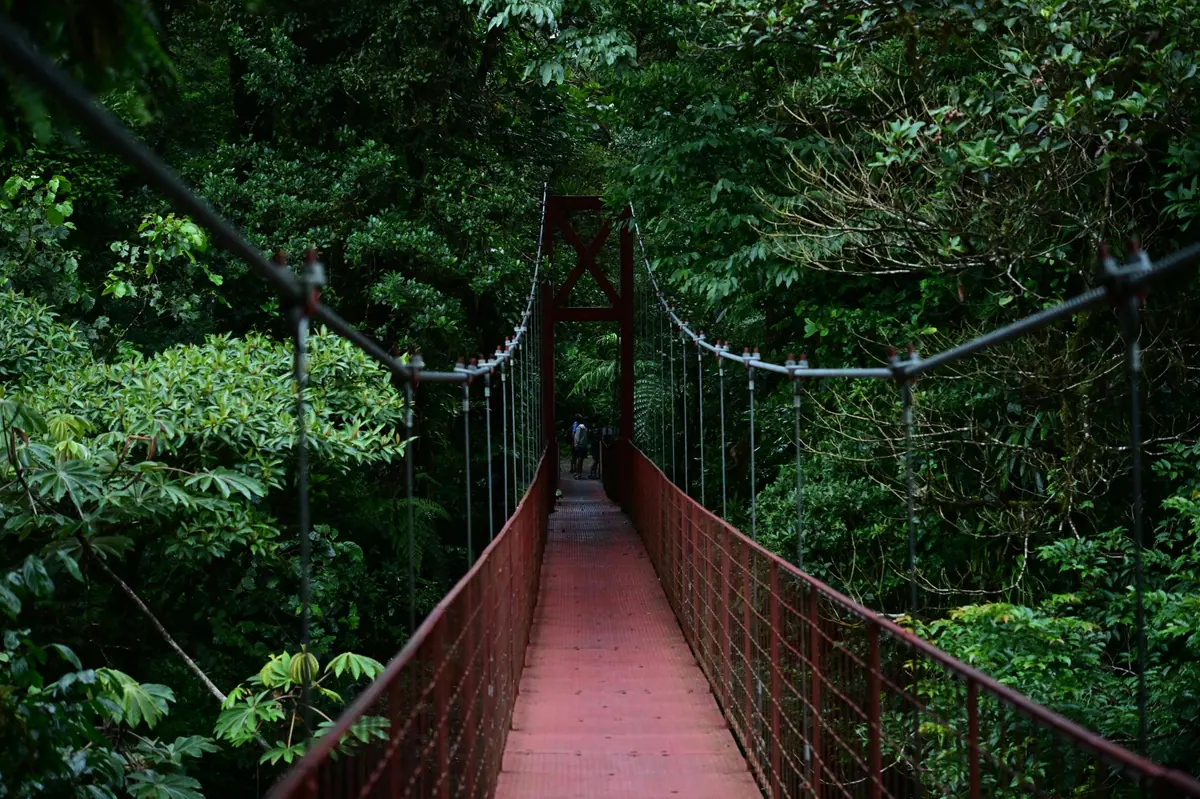
Orientation: Santa Elena, Cerro Plano and “Monteverde”
Monteverde is not one place. Santa Elena is the town — restaurants, shops, the bus stop and most hotels — and from there a single road climbs roughly 6 km toward the reserves, passing through Cerro Plano. Strictly speaking, Monteverde is the original Quaker settlement and the reserve at the top of that road, but locally the whole area is called Monteverde.
Elevation sits around 1,440 m (4,700 ft), which is why the air feels cooler and mistier than the coast. Bring layers in every season.
Getting to Monteverde
- From San José (~3.5 hrs): Route 606 via Sardinal is paved all the way to Santa Elena, though narrow, curvy and unlit.
- From Liberia / Guanacaste (~3.5 hrs): Route 145 through Las Juntas mixes gravel and concrete; high clearance helps, especially in the green season.
- From La Fortuna / Arenal: most travelers take the Jeep–Boat–Jeep transfer (about 3 hours) instead of driving around Lake Arenal.
- By bus: direct services from San José take roughly 4–5 hours.
One rule holds for every route: avoid arriving after dark. Sunset is close to 6 pm year-round, roads are unlit and fog moves in quickly at this elevation.
When to go
Dry season (mid-December to April) brings the most reliable trail conditions and the clearest light, along with the windiest weeks and the busiest reserves. Green season (May to November) brings fuller waterfalls, deeper greens, dramatic mist and thinner crowds, with a short dry spell in June–July known locally as the veranillo; mornings are usually clear and rain tends to arrive later in the day.
For the Resplendent Quetzal specifically, breeding season from March to May is when sightings are most consistent, usually early in the morning. See the seasonal birding guide
How many days to plan
One full day works if you pair a guided morning walk with an evening night walk. Two days lets you add a second reserve plus a canopy or agritourism activity. Three days is where Monteverde stops feeling rushed: a dawn birding session, a different reserve the next morning, one adventure or cultural activity, and a proper look at Santa Elena. For most travelers, two to three nights is the sweet spot.
The cloud forest reserves, compared
The reserves are not interchangeable: they differ in crowds, terrain and what you are likely to see.
- Curi-Cancha Reserve — the strongest single reserve for birdwatching: more open terrain and forest edge make sightings easier than in dense forest. This is where our private birdwatching tours run.
- Monteverde Cloud Forest Biological Reserve — the original and most famous reserve, with primary cloud forest and the Continental Divide Trail. It draws the largest crowds. We also guide here.
- Santa Elena Cloud Forest Reserve — higher, less crowded and locally run. Denser canopy makes wildlife slightly harder to spot, but the solitude is excellent.
- Children's Eternal Rainforest / Bajo del Tigre — the easiest, most accessible trail in the area: wide, well-graded paths through secondary forest, ideal for young children or a shorter walk.
Our guided walks currently run in Curi-Cancha, the Monteverde Cloud Forest Biological Reserve and — for night walks — the Monteverde Wildlife Refuge. Ask directly if you want another reserve worked into your day.
Beyond the reserves: canopy parks and adventure
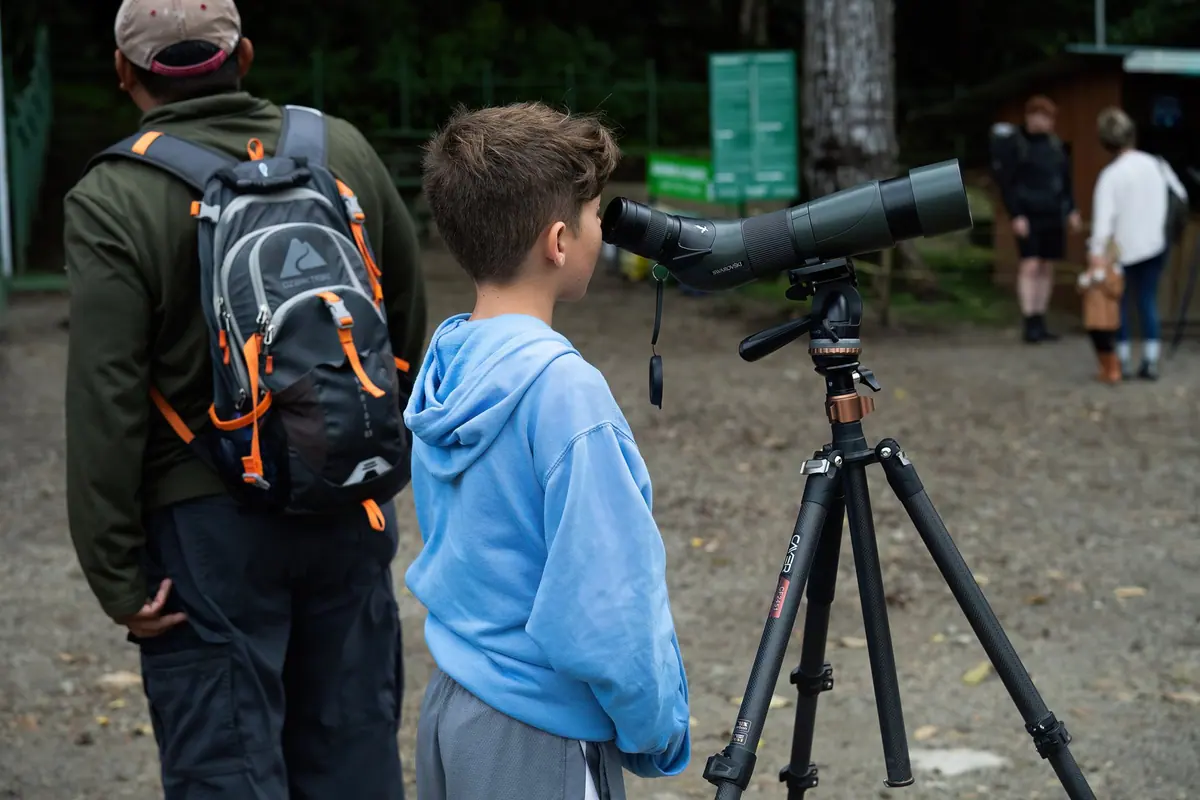
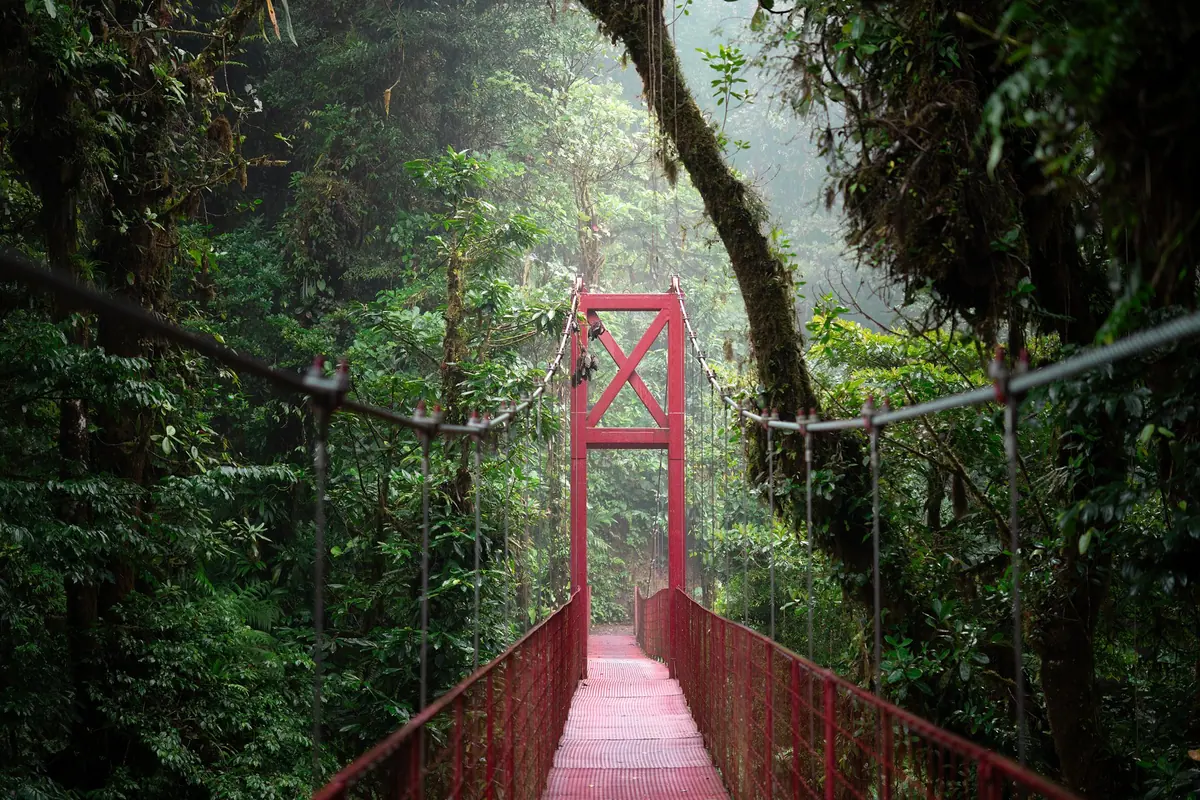
Several adventure parks operate independently of the biological reserves, built for hanging bridges, ziplines and aerial views rather than guided natural history. Selvatura Park and Sky Adventures run extensive bridge networks and zipline circuits; 100% Aventura and Treetopia offer similar combinations. The Original Canopy Tour was the first zipline built in Costa Rica and stays closer to the trees than the newer, longer-cable parks.
Book these directly with the park and treat them as their own half-day block rather than stacking them onto a reserve morning.
Families, rainy afternoons and wildlife exhibits
Within minutes of Santa Elena there is a cluster of small, well-run exhibits: a Butterfly Garden with netted habitats, a Frog Pond (Ranario) with native frogs including the red-eyed tree frog, a Bat Jungle with live specimens and a good conservation talk, a Hummingbird Gallery with feeders at arm's length, and an Orchid Garden with a compact self-guided loop. Most take 30–45 minutes and can be strung together into a half-day if the weather turns.
Coffee, chocolate, sugar and cheese
Monteverde's agricultural side is worth a half-day. Coffee tours — Don Juan's is the best known — walk you from plant to cup, usually with cacao and sugarcane tastings; El Trapiche runs a similar combined tour on a working family farm with an oxcart ride and a traditional sugar demonstration. The Monteverde Cheese Factory (La Lechería) traces back to the original Quaker settlers, and the CASEM women's cooperative in town sells embroidery and crafts directly from the artisans.
Santa Elena: eat, shop and catch the sunset
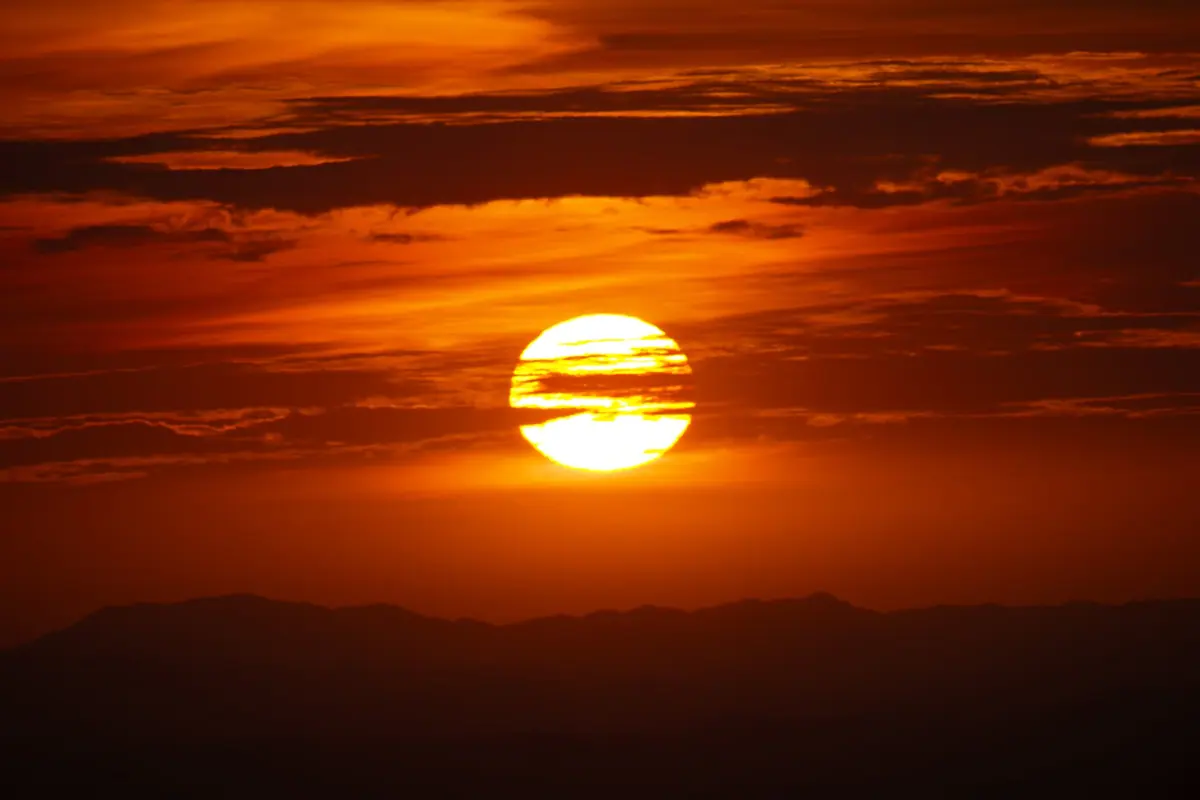
Santa Elena is compact enough to cover on foot from most hotels in town. For dinner, Tramonti, Sabor Tico and Tortillas Food & Drink cover most tastes; Orchid Café and Stella's are reliable for coffee and breakfast. If you are staying along the road toward the reserves, ask your hotel about sunset viewpoints — several look straight out over the Pacific slope.
Choose your Monteverde, by traveler type
- Nature lovers and photographers — build the trip around light and quiet: an early guided walk in Curi-Cancha or the Cloud Forest Reserve, a mid-morning break, and a night walk the same evening.
- Families — Bajo del Tigre plus the short wildlife exhibits near town keep walking distances and attention spans realistic.
- Solo travelers — shared small-group tours (the nature tour and the night walk both run this way) are an easy way to meet other travelers, and Santa Elena is comfortable to explore alone.
- Birdwatchers — Curi-Cancha first, with a private scope-equipped guide and a 6:10 am start. Two mornings in two different reserves almost always outperform one long day in a single reserve.
Sample itineraries
- One day — guided nature walk (7:30 am, about 3 hrs), lunch and free time in Santa Elena, night walk (5:30 pm, about 2 hrs).
- Two days — day 1: private birdwatching at dawn, free afternoon, night walk at dusk. Day 2: hanging bridges in the morning, coffee or cheese tour in the afternoon.
- Three days — day 1: birdwatching and night walk. Day 2: private full-day tour across two reserves. Day 3: Bajo del Tigre or San Luis Waterfall, then Santa Elena.
Where to stay in Monteverde
Most travelers sleep in or near Santa Elena and drive or shuttle up the reserve road each morning. Two pages on this site cover the options: a hotel overview organised by distance to the trailheads, and our own private lodging a short walk from town.
Practical info
- Pack a waterproof jacket, closed shoes with grip, layers and a headlamp or flashlight.
- Cash is still useful for small sodas, shops and tips; ATMs are available in Santa Elena.
- Taxis operate in Santa Elena and most hotels can arrange transport; we can arrange hotel pickup for our own tours on request.
- Meeting points for each tour are mapped here: Monteverde meeting points
Frequently asked questions
- Is Santa Elena Reserve or the Monteverde Cloud Forest Reserve better?
- Neither is strictly better — they suit different priorities. Santa Elena Cloud Forest Reserve is quieter and higher, better if you want solitude and scenery. The Monteverde Cloud Forest Biological Reserve is busier but has the Continental Divide Trail and the strongest reputation. Curi-Cancha, a third option, is the strongest choice specifically for birdwatching.
- How many days do I need in Monteverde?
- One full day works if you combine a guided morning walk with an evening night walk. Two to three days lets you add a second reserve, an adventure or agritourism activity, and time in Santa Elena itself without rushing.
- Is Monteverde good for families with young kids?
- Yes. Bajo del Tigre's wide, easy trail and the cluster of short wildlife exhibits near Santa Elena — butterflies, frogs, bats, hummingbirds — suit shorter attention spans and less demanding terrain than the main reserves.
- Do I need a rental car in Monteverde?
- Not necessarily. Santa Elena is walkable, taxis cover the reserves and nearby attractions, and most hotels and tour operators — including Nasua Tours — can arrange pickup on request. A car mainly helps if you want to move independently between several attractions in one day.
- When is the best time to see the Resplendent Quetzal?
- Breeding season, roughly March through May, offers the most consistent sightings, typically early in the morning along reserve trails near the Continental Divide.
- Are reserve entrance fees included in Monteverde tours?
- It depends on the operator. Nasua Tours nature and night tours include reserve admission. Birdwatching products cover guided service only; the reserve is agreed at Stella's and admission is paid on arrival.